
The Leonidio climbing guide · Sampatiki Suites & Spa
Sectors, grades, seasons and logistics for one of the best sport-climbing destinations in Europe, written by the people who host climbers here every winter.
2,700+
Routes
4 to 9a+
Grades
About 110
Sectors
Oct to Apr
Season
In one minute
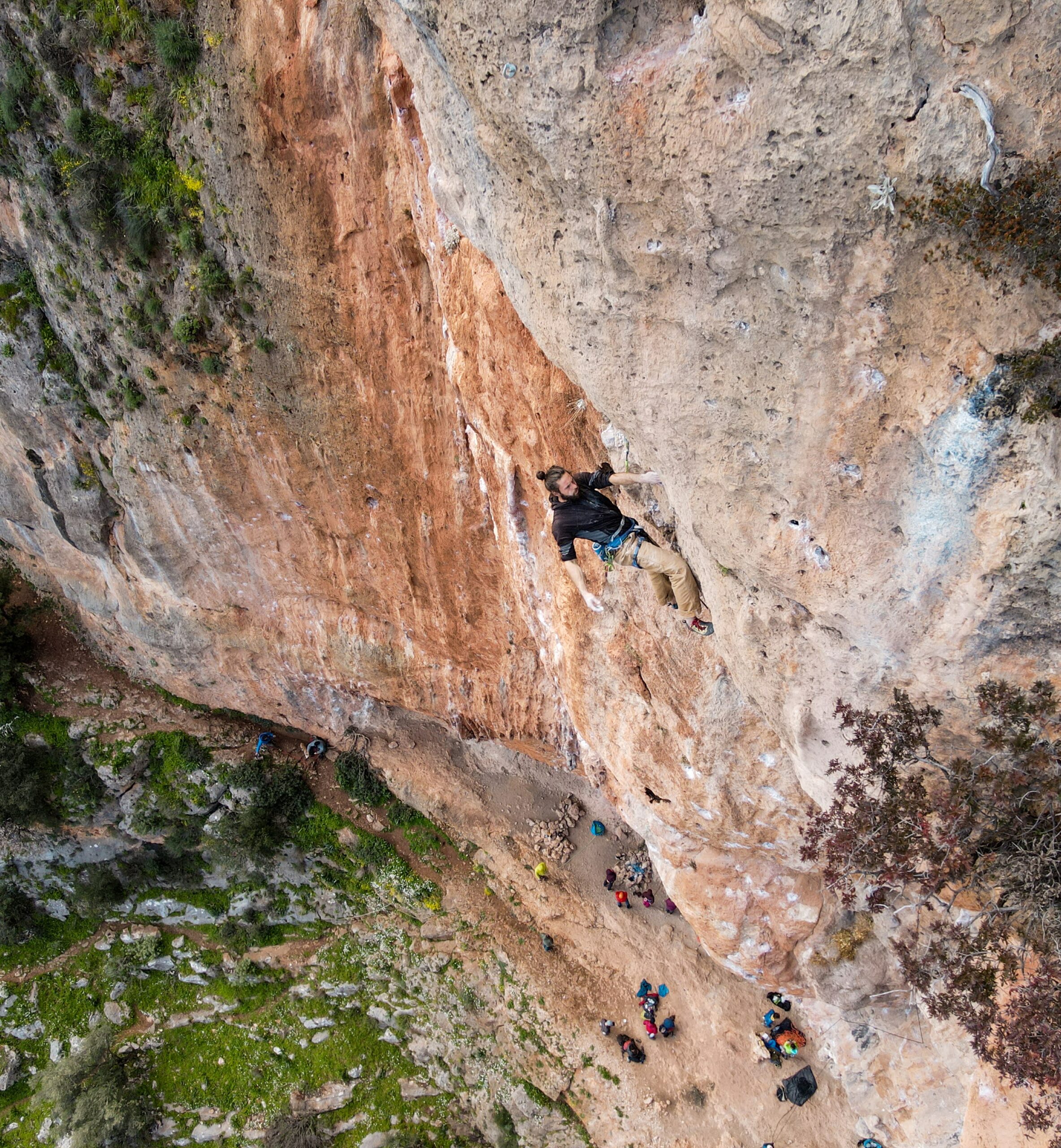
Leonidio sits at the foot of a red limestone cliff, a few minutes from the sea. The routes are plentiful, well bolted and mostly short, and the winter sun makes it one of the few places in Europe where you can climb in a T-shirt in December.
It is sometimes called the new Kalymnos, and for a first or a fiftieth trip it earns the comparison: you can pick a different sector every day for a fortnight and still leave routes undone.
The rock
Limestone in red, orange and grey: tufas, pockets, slabs, walls and caves
The routes
More than 2,600 single-pitch and about 50 multi-pitch, in around 110 sectors
The grades
From 4 to 9a+, with most routes between 6a and 7b
The season
Mid-October to mid-March at its best, October to April in general
The rope
70 m will do, 80 m is better, with 20 to 22 quickdraws
The base
Leonidio town, or the coast at Sampatiki, about seven kilometres away
The festival
Leonidio Climbing Festival, 30 October to 1 November 2026
The setting
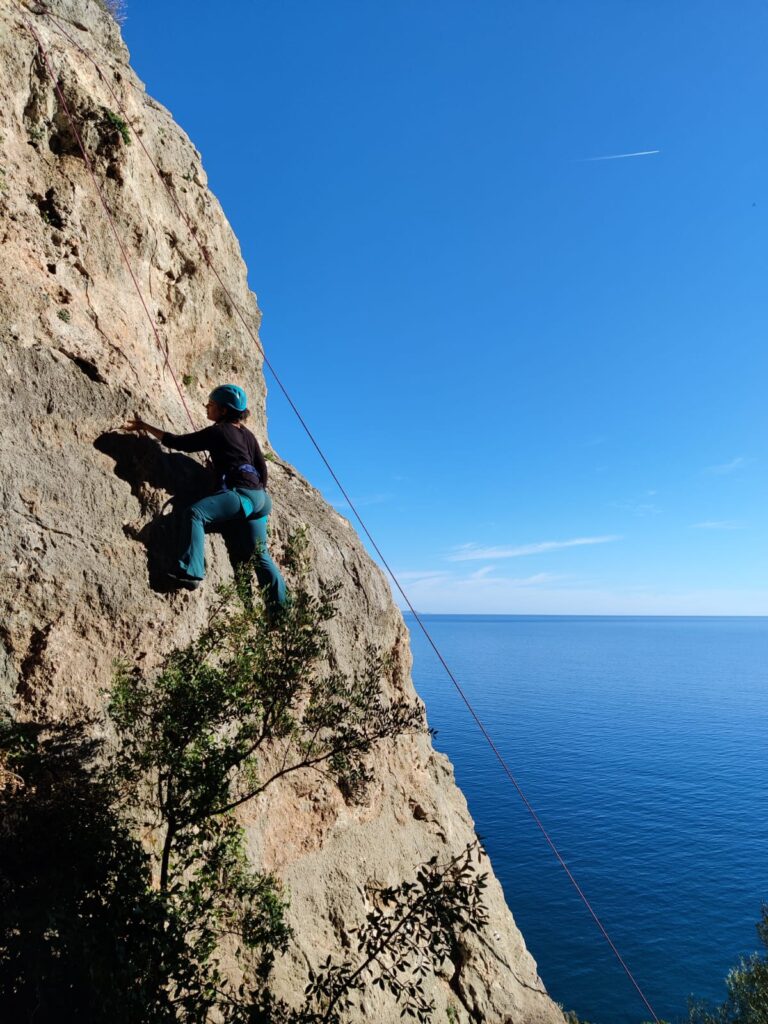
Most of the main sectors are within fifteen minutes of the town, so you can drive in, walk for a few minutes and be on the rock before the sun gets round. Between pitches you look out over olive and orange groves to the Gulf, and in the evening you are back in a village with tavernas, a bakery and a climbers' café.


When to climb
Leonidio is a winter destination. From late October to mid-March the sun-facing sectors are warm, dry and busy. In April and early May you can still climb, but you will be hunting for shade by lunchtime. From June to September it is too hot for most crags, although north-facing walls and high sectors can work early in the morning or late in the day.
J
F
M
A
M
J
J
A
S
O
N
D
Sunny sectors
Shaded sectors
Best
Good
Limited: early or late in the day, or shade only
Too hot
A guide to typical conditions, not a forecast. Check the weather and local advice before you go.
Pick a south-facing sector and climb in the middle of the day. A windproof layer and warm gloves for belaying matter more than you expect.
Look for north-facing or high-altitude sectors, start early, and finish by lunchtime. Then swim: the sea is ten minutes away.
Some caves and steep walls stay dry in showers. Ask us or the local shop which sectors are climbable that day.
The sectors
There are around 110 sectors in total, so no list is complete. These are the ones climbers most often mention for a first visit, grouped by what you are likely to need. Grades and approach times are approximate and orientation varies by source, so always check the current guidebook.
Short walk-ins, good for a first day or a late start.
About 6a to 8a+
One to three minutes from the car, with tufas and a good spread of grades. A favourite when you want to climb a lot with little effort.
About 4a to 8a+
A big roadside crag with short, generously bolted routes and a social atmosphere. Popular, so go early in high season.
Mostly 6 and 7
About ten minutes from the town. A dependable mid-grade sector often recommended for a first visit.
Where most climbers spend their first few days.
Many 5s and 6s
A favourite for lower grades, with plenty of routes to build mileage on.
About 5a to 8a
A steady uphill walk of around thirty minutes to a sunny, atmospheric wall with broad 6s and low 7s. Good for a clear day or an overcast one.
For stamina and strength.
Mid-6s up to hard
Red tufa formations and free-hanging stalactites, shaded after midday. One of the most photographed sectors, and often busy.
About 5a to 8a+
Famous tufa routes beside the road up to Elona Monastery, around fifteen kilometres from town, with a very short approach.
6s and harder
Quality steep climbing in the 6s and above, shaded early in the day and again in the evening.
Mid-7s in the cave
A sector with several sub-areas, from steep cave lines to more vertical walls.
When the weather is against you.
About 6a to 8a
A long, pocketed wall on the north side of the great red cliff, in shade all day, which makes it a strong choice for hot days.
About 6a to 7c
A shaded sector about fifteen minutes from the road, with routes named after the Muppets.
Mostly 6c and up
Short, steep routes that tend to stay dry, with a quick walk-in. A useful wet-weather option.
About 6a to 8a+
A steep cave and tufa venue at around 800 metres, best from spring to autumn when the coast is warm.
By level
Leonidio suits climbers from about 5a upwards best. The bulk of the routes are 6a to 7b, so intermediate climbers have the most choice. Some sources note that grades at newer sectors can feel soft, so treat the first day as a calibration.
4 to 6a
Skiadhianiko, Sabaton and Hot Rock have the friendliest mix of lower grades. If you are new to outdoor climbing, book a local instructor for the first day or two.
6a to 7a
This is where most routes are. Almost every sector has something for you, so plan your days around sun, shade and crowds.
7a to 8a+
Mars, Twin Caves, Elona and the Theós cave offer steep tufas and long, sustained pitches.
49 multi-pitch
There are around fifty multi-pitch lines for those who want a longer day. A single 80 m rope or two half ropes are usual.
Plan your trip
A few practical decisions make a Leonidio trip go smoothly. These are the ones climbers most often ask about.
Take 70 m at minimum and 80 m if you can. Many routes are 35 to 40 m and some reach 50 m. For multi-pitch, use one 80 m rope or two 50 to 60 m ropes.
Carry 20 to 22. Most routes are well bolted, but long ones need the full set.
Wear one, for climbing and for belaying. There is some loose rock and busy sectors have people above you.
About three and a half hours by car from Athens airport. There is also an intercity bus from Athens, but a car makes it easy to reach the crags.
The Panjika Cooperative guidebook covers the area in detail, and a separate official guide supports crag maintenance. Buy it locally or online before you travel.
There is a climbing shop and a climbers' café in town, plus supermarkets, bakeries and tavernas with vegetarian options.
The area is busiest from late October to December and around the November festival. Go on a weekday and start early for popular sectors.
Where to stay
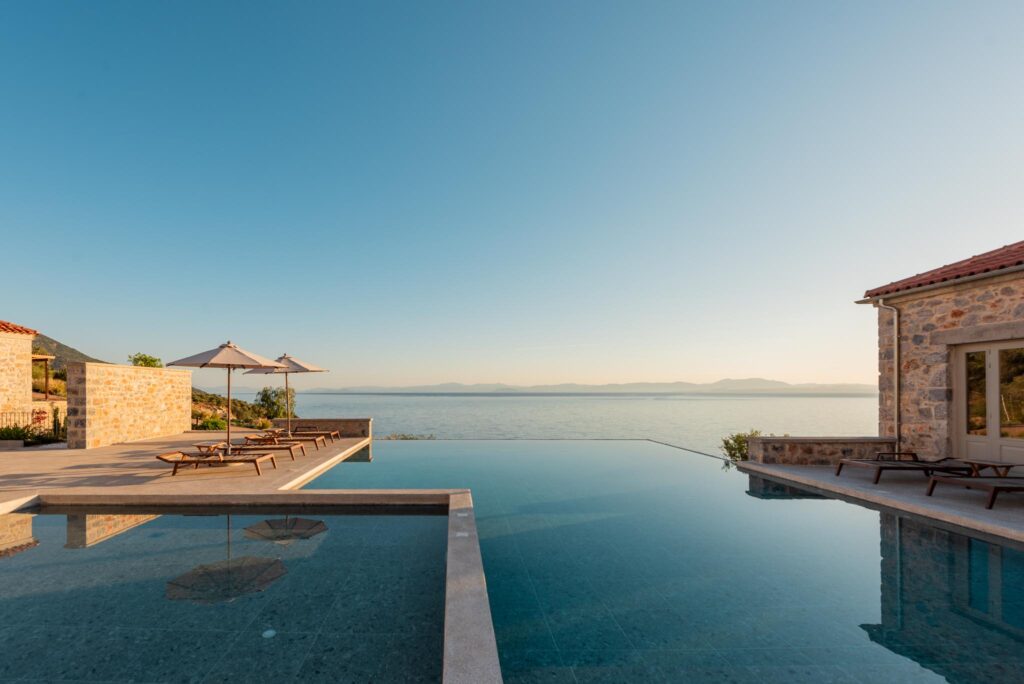
We run a small hotel above the harbour at Sampatiki, about seven kilometres from Leonidio, with eleven sea-view suites. It was set up with climbers in mind: you climb all day, then come home to the sea, a hot spa and a proper night's sleep.
Breakfast from 07:00 with local products, and a takeaway box if you leave for the crag before it opens.
A sauna and a jacuzzi, free for every guest, for tired forearms and cold evenings.
Every suite has a full kitchen, so you can cook what you need on training and rest days.
Our largest suite sleeps four plus two, with two bedrooms and two bathrooms, so a group can share it.
Reception is open 24 hours, which suits late finishes and early departures.
Rest days
Even keen climbers need a day off. The area has walking, beaches, monasteries and some of the best food on the Peloponnese.
Trails to a hilltop chapel and a cliff monastery.
A long white-pebble beach for a swim after the crag.
Right above the Elona tufa sector.
The town, the food and the area.
Monemvasia, Nafplio, Mystras and more.
Questions
When is the best time to climb in Leonidio?
From mid-October to mid-March the sun-facing sectors are at their best, and October to April is good in general. Early May is still possible with shade. Summer is too hot for most crags.
How many routes are there in Leonidio?
The latest guidebook lists more than 2,600 single-pitch routes and around 50 multi-pitch routes in about 110 sectors, and new routes are still being added.
What grades can you climb in Leonidio?
Grades run from 4 to 9a+. Most routes sit between 6a and 7b, so intermediate climbers have the most choice.
Is Leonidio good for beginners?
It is best for climbers from about 5a upwards, with friendly sectors such as Skiadhianiko, Sabaton and Hot Rock. If you are new to outdoor climbing, book a local instructor for your first days.
What length of rope do I need in Leonidio?
At least 70 m, and 80 m is better. Many routes are 35 to 40 m and a few reach 50 m. Carry 20 to 22 quickdraws.
Which is the best guidebook for Leonidio?
The Panjika Cooperative guidebook is the most detailed and covers the area in depth. You can buy it locally or online before you travel.
Can you climb in Leonidio when it rains?
Sometimes. Some caves and steep walls stay dry in showers, for example the Montanejos Climbing Garden. Ask locally before you drive to a crag.
Can you climb in Leonidio in summer?
It is hard. Most crags are too hot, but north-facing and high sectors such as Jupiter and Nifada can work early or late in the day.
How do I get to Leonidio from Athens?
It takes about three and a half hours by car from Athens airport. There is also an intercity bus from Athens, but a car makes it much easier to reach the crags.
Are there climbing shops and gear rental in Leonidio?
Yes. There is a climbing shop and a climbers' café in town, where you can buy gear and the guidebook and ask for advice. Check what is in stock before you travel.
When is the Leonidio Climbing Festival?
The 12th edition runs from 30 October to 1 November 2026, with Chris Sharma as special guest. Registration is open on the official festival website.
What can a non-climbing partner do in Leonidio?
Plenty: walk the trails, swim at nearby beaches, visit Elona Monastery, enjoy the spa at our hotel, or take a day trip to Monemvasia or Nafplio.
Sources and further reading
Sector details and route counts in this guide are compiled from published guides and the local climbing community, and checked against what our guests tell us. Access, bolting and conditions change, so check the current guidebook before you go.
Stay with us
Eleven sea-view suites, a spa and a breakfast that starts at 07:00, a few minutes from the crags. Book direct for the best rate.